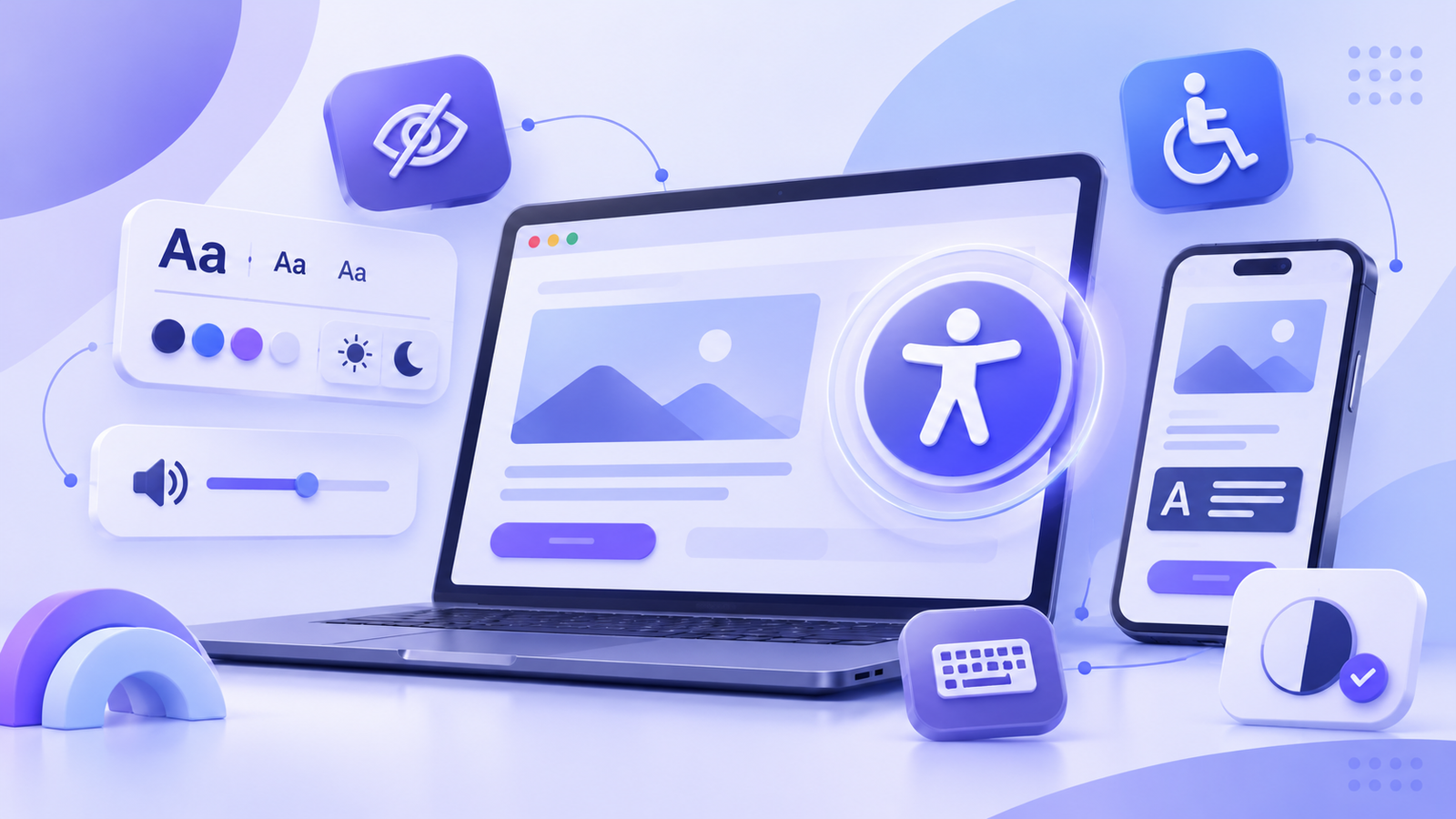
Designing for the web isn’t just about crafting sleek visuals; it’s about building a digital space where everyone can seamlessly interact with your content. Integrating website accessibility design from day one ensures your platform remains usable, compliant, and intuitive for every visitor who clicks onto your site.
1. Empowering Every User: Removing Barriers for People with Disabilities
Building an inclusive platform ensures that people navigating with screen readers, keyboard controls, or switch devices experience zero friction. Accessibility improvements can make websites easier to navigate for users with disabilities as well as users on different devices and environments.
[Did You Know?] Over 1 billion people globally live with some form of disability, making accessible web design a massive opportunity for audience reach.
When you incorporate inclusive web standards, like high-contrast text and descriptive ARIA labels, you eliminate invisible digital hurdles. Prioritizing accessible UI patterns opens your product to millions of users who rely on assistive technologies every single day.
2. Universal Usability: Enhancing Experiences Across All Devices and Environments
The benefits of accessible design extend far beyond specialized assistive devices. Features like captions, scalable typography, and clear tap targets help users navigating in bright sunlight, noisy environments, or on tiny mobile screens.
[Did You Know?] Known as the “Curb Cut Effect,” design modifications originally built for disability access—like video captions—are used daily by over 80% of the general population.
Structuring your content around clear digital accessibility guidelines creates a smoother experience across smart TVs, wearables, and smartphones alike. Clean site architecture and flexible layouts improve overall user interface readability, ensuring high engagement regardless of the user’s physical environment or screen size.
Test Your Knowledge: Web Accessibility Quiz
1. Who directly benefits from website accessibility improvements?
-
Answer: Users with disabilities, as well as people operating across different devices and challenging physical environments.
2. How many people worldwide live with some form of disability?
-
Answer: Over 1 billion people globally.
3. What is the phenomenon where features designed for disability access end up benefiting everyone?
-
Answer: The Curb Cut Effect.
Frequently Asked Questions
What is website accessibility design?
It is the practice of designing and developing websites so that people with disabilities—including visual, auditory, motor, and cognitive impairments—can navigate, understand, and interact with them effectively.
How does web accessibility benefit SEO?
Accessible websites use clear heading structures, descriptive image alt text, and semantic HTML markup, which help search engine crawlers understand and index content far more efficiently.
What are the WCAG guidelines?
The Web Content Accessibility Guidelines (WCAG) are a set of internationally recognized standards organized around four core principles: making web content Perceivable, Operable, Understandable, and Robust (POUR).