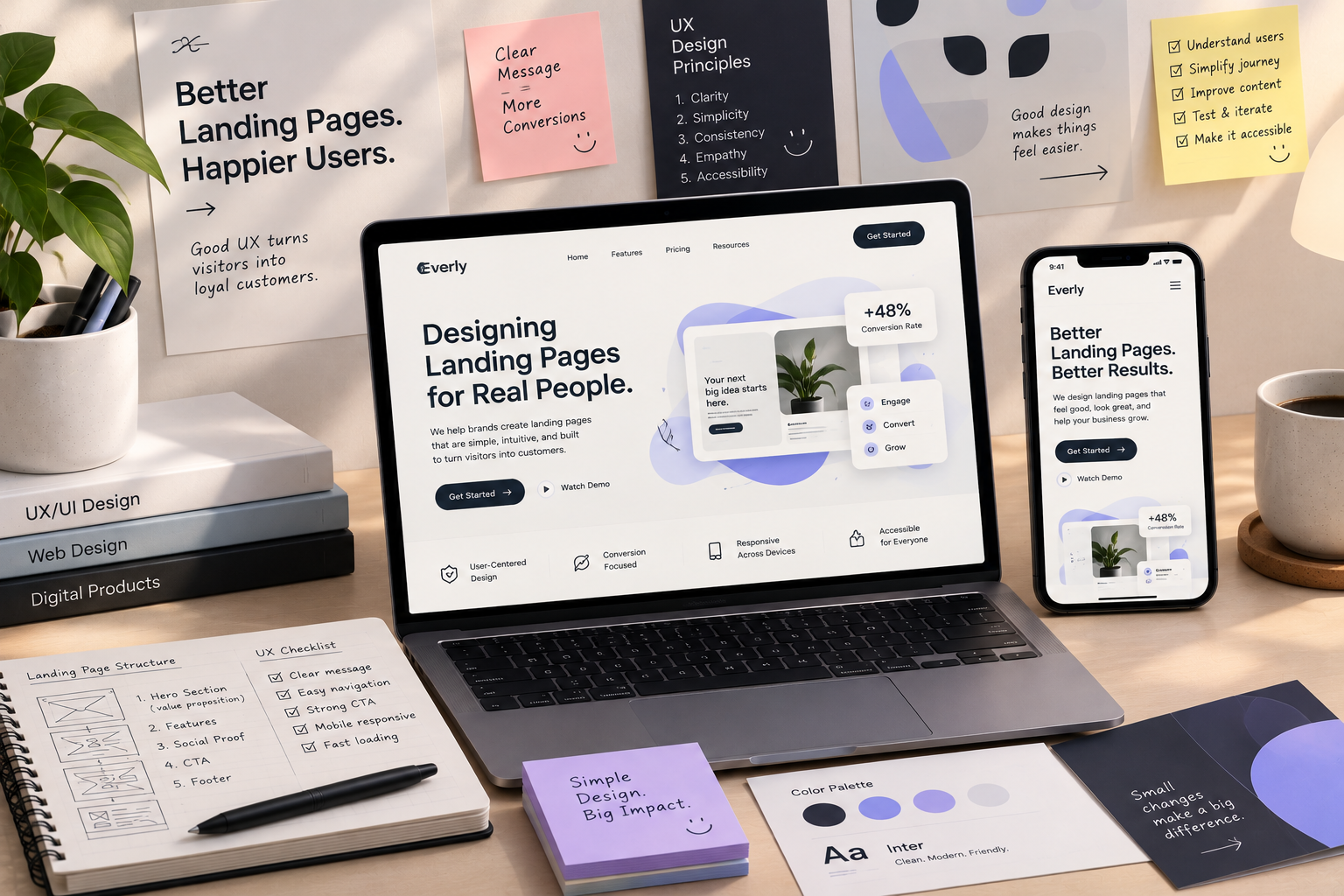
High ad spend and strong traffic mean nothing if visitors leave your landing page within seconds without taking action. Applying intentional landing page ux design removes cognitive friction, aligns page content with user intent, and converts hesitant visitors into confident leads or buyers.
This guide details how optimizing user flows, visual hierarchy, and page usability turns low-performing landing pages into high-converting conversion engines.
[Did You Know?] Landing pages perform better when visual hierarchy directs attention toward the information users need before making a decision, eliminating guesswork and cognitive overload.
1. The Core Relationship Between UX Design and Conversion Rates
A strategic approach to landing page user experience ensures every element on the screen serves a singular purpose: guiding visitors toward a specific action.
Great UX directly impacts conversion rates by focusing on three functional principles:
- Reducing Friction: Minimizing multi-step forms, confusing layouts, and slow-loading media assets.
- Establishing Immediate Clarity: Answering what your offer is, who it benefits, and how to get it within three seconds.
- Building Instant Trust: Placing strategic proof points where users naturally pause during scrolling.
2. Key Pillars of Effective Landing Page Design
Designing a high-converting page requires structuring layout elements around human behavior. Implementing proven principles of effective landing page design keeps visitors engaged from hero section to footer.
Visual Hierarchy & Directional Cues
Organize content using contrasting font sizes, intentional whitespace, and directional cues like arrows or eye-gaze lines. These elements naturally guide the reader’s eyes toward primary CTAs without feeling forceful.
Page Speed and Mobile Usability
Mobile users expect instant page loads and seamless interaction. Optimize image formats, compress custom fonts, and ensure touch targets remain large enough for easy thumb taps.
3. Optimizing Landing Page Usability for Maximum Engagement
Focusing on landing page usability prevents common user drop-offs caused by confusing forms or cluttered layouts.
| Usability Element | Low-Converting Approach | UX-Optimized Approach |
| Call to Action (CTA) | Generic text (“Submit”) hidden below the fold | Action-oriented text (“Get My Free Guide”) with sticky mobile visibility |
| Lead Form | 7+ mandatory fields asking for non-essential data | 2-3 essential fields or a progressive multi-step form |
| Trust Signals | Generic testimonials hidden on a separate tab | Real customer quotes with photos adjacent to the primary CTA |
| Navigation | Full site menu with external header links | Distraction-free header with logo only |
4. Actionable Steps to Improve Your Landing Page UX
Follow these practical steps to audit and optimize your landing page interface:
- Conduct First-Click Testing: Verify whether users click on your primary CTA within their first few seconds on page.
- Streamline Form Input Fields: Remove optional fields and use auto-fill features to speed up completion.
- Align Page Copy with Ad Intent: Match headline terminology directly to the ad copy or search query that drove the visit.
- Implement Sticky CTAs on Mobile: Keep your main action button fixed to the bottom of the screen as mobile users scroll.
Checklist: Landing Page UX Optimization
[ ] Eliminate top navigation menus to keep users focused on the main offer
[ ] Display a prominent, benefit-focused hero headline above the fold
[ ] Maintain high contrast between background colors and primary CTA buttons
[ ] Keep forms short and easy to complete on mobile devices
[ ] Place authentic testimonials or trust badges near action buttons
[ ] Ensure mobile page load time stays under two seconds
Conclusion
Mastering landing page ux design bridges the gap between user interest and measurable conversions. By designing clear visual paths, streamlining forms, and focusing on page usability, you turn casual visitors into loyal customers while maximizing your marketing ROI.