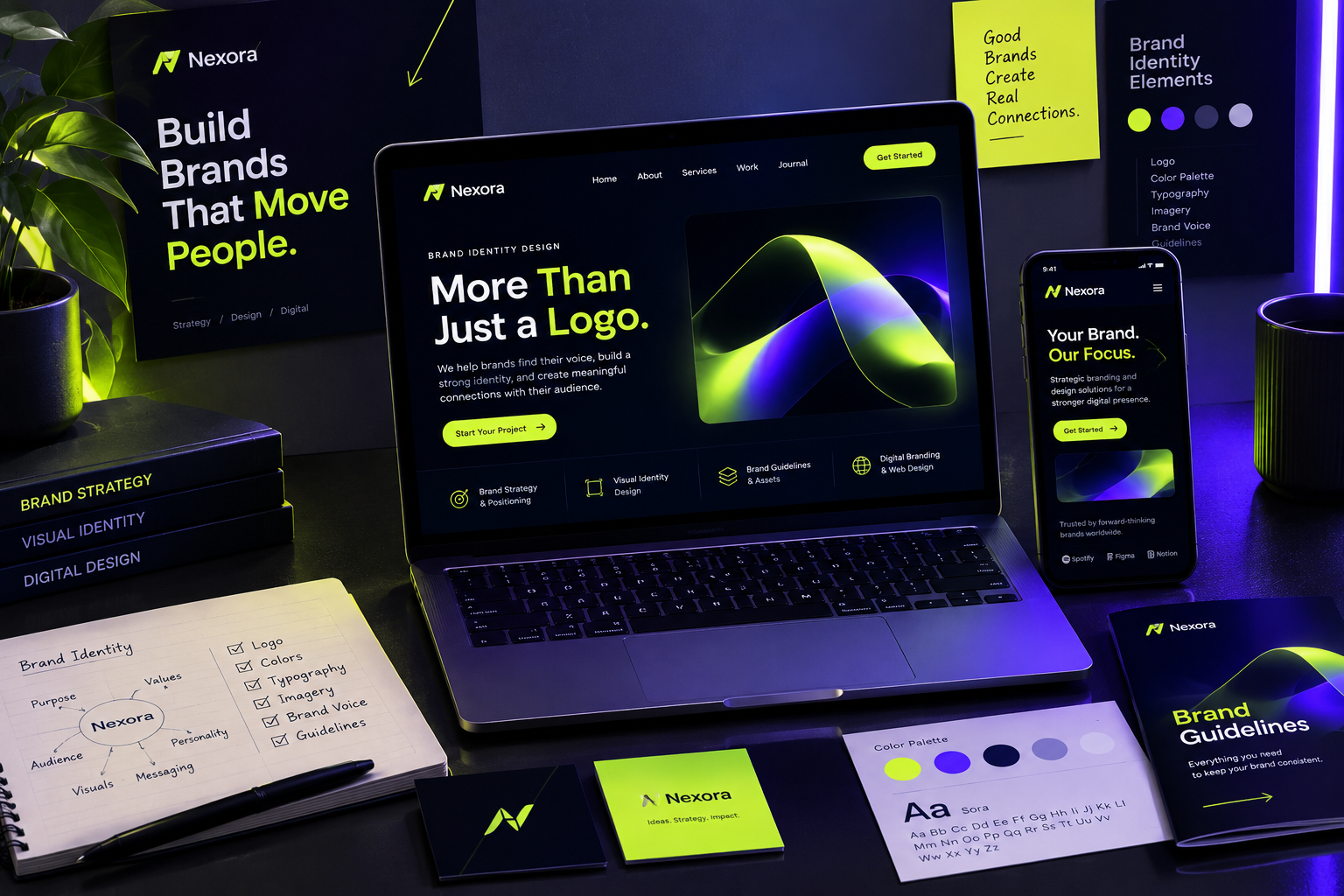
A forgettable brand costs you market share every single day. If your business looks like every other competitor, buyers will default to choosing based on price alone. Building a distinct presence requires more than picking nice colors or dropping a logo on a website—it demands a deliberate strategy that aligns your business purpose with audience perceptions.
Knowing how to build a strong brand identity allows you to command premium pricing, drive customer loyalty, and stand out in saturated markets.
In this comprehensive guide, you will learn the step-by-step process of brand strategy development, how to construct a recognizable visual and verbal identity, and the exact roadmap needed for successful brand identity development.
What Is a Brand Identity (and Why Strategy Comes First)?
Before diving into design, you must understand what makes up a strong brand identity. Your brand identity is the collection of all visual, verbal, and emotional elements that your company creates to portray the right image to its audience.
Many business owners jump straight into visual asset creation without a clear foundation. True brand identity development starts with brand strategy development—defining who you are, who you serve, and why you matter before opening a single design file.
Phase 1: Foundational Brand Strategy Development
Every enduring brand relies on strategic clarity. Follow these three steps to build your strategic foundation:
1. Clarify Core Purpose, Vision, and Values
Document why your company exists beyond making money. Identify 3 to 5 core values that guide your business decisions and internal culture.
2. Map Target Audience and Competitor Gaps
Identify your ideal customer persona by examining their specific pain points, aspirations, and buying behaviors. Audit your primary competitors to pinpoint positioning gaps in the market.
3. Formulate a Distinct Brand Positioning Statement
Use this tested positioning formula to articulate your market space clearly:
For [Target Audience], who [Target Need], our brand is the [Category] that [Key Benefit] unlike [Competitor Alternative] because [Proof Point].
Phase 2: Designing Your Visual and Verbal Elements
Once your strategy is set, translate those abstract concepts into tangible brand assets across four main pillars:
1. Flexible Logo Architecture
Design a versatile primary logo along with secondary variations (stacked, horizontal, sub-brand marks, and responsive favicons). Ensure legibility across screen sizes and physical formats.
2. Strategic Color Palette
Select primary, secondary, and neutral accent colors based on brand psychology. Record exact color standards for every medium:
- HEX / RGB for digital experiences
- CMYK for physical printing
- Pantone (PMS) for precise color matching
3. Typography System
Pair a strong headline typeface with an easily readable body font. Establish clear font weight standards and web fallbacks.
4. Brand Voice and Tone Guidelines
Define your brand’s verbal persona using a three-attribute model (e.g., Authoritative, Warm, Direct). Include explicit “Say This / Don’t Say That” examples to guide your writing team.
Phase 3: Executing How to Build a Strong Brand Identity Across Touchpoints
To transform your strategy and design into a strong brand identity, execute your rollout in four structured steps:
Step 1: Centralize Brand Guidelines
Document all visual, verbal, and strategic rules in a centralized brand style guide (using tools like Notion or Frontify). Make this resource accessible to all staff and external agency partners.
Step 2: Build Reusable Marketing Templates
Provide pre-approved templates for slide decks, social media banners, email newsletters, and sales sheets. This removes operational friction for non-designers.
Step 3: Conduct Internal Team Onboarding
Train sales, marketing, and customer support representatives on how to apply the brand voice and visual standards across daily customer interactions.
Step 4: Perform Audits and Refinements
Run quarterly audits across web pages, print collateral, and social media channels to fix off-brand assets and refine standards as your product catalog evolves.
Brand Identity vs. Brand Image: Strategic Differences
Understanding the difference between what you construct (identity) and what customers perceive (image) is crucial for long-term management.
- Brand Identity: The intentional visual, verbal, and strategic framework created by the company. It is 100% under your internal control and includes logos, color palettes, tone of voice, and positioning statements to present a cohesive market presence.
- Brand Image: The actual perception, reputation, and feelings held by customers and the public. It is shaped externally by customer service experiences, product quality, reviews, and word-of-mouth perception.
Summary Key Takeaways
- Knowing how to build a strong brand identity requires starting with strategic positioning before designing visual assets.
- Successful brand identity development relies on four core pillars: logo architecture, color hierarchy, typography, and verbal tone rules.
- Centralizing your brand style guide ensures consistency across both internal teams and external vendors.
- Regular brand audits ensure your brand identity remains cohesive and aligned with customer perceptions over time.
Frequently Asked Questions (FAQs)
What is the first step in building a brand identity?
The first step is defining your core brand strategy development framework—including your mission, core values, target customer persona, and market positioning statement—before creating any visual designs.
How much does brand identity development cost?
Brand identity development costs vary widely based on business size and scope. Early-stage startups typically invest between $3,000 and $15,000 for identity development, while mid-market and enterprise rebrands range from $25,000 to over $100,000 for comprehensive market strategy and asset systems.
How long does it take to build a complete brand identity?
A full brand identity development project usually takes between 6 to 12 weeks. This timeframe accounts for initial strategic discovery, market research, design iterations, guideline documentation, and template creation.